trc networks business telephone systems
trc networks on twittervoip telephones rss feed
Showing posts with label mobile. Show all posts

Monday, March 5, 2012

Avaya Expands Work With a Growing Number of K-12 Schools on Bring Your Own Device Mobile Learning Programs

BASKING RIDGE, NJ -- (Marketwire) -- 03/05/12 --


  • Confronting budget constraints, K-12 schools across the U.S. are accelerating implementation of Bring Your Own Device and One-to-One Computing programs

  • Economic realities are resulting in changing policies and attitudes; more schools are favoring BYOD programs to encourage students to bring mobile devices to school

  • Avaya's device-agnostic approach and expertise in unified communications and networking are cited as key factors in school district IT vendor selection


Avaya, a global provider of business collaboration and communications solutions and services, today said it is working with a rising number of school districts across the nation on programs designed to tap the vast array of student-owned computing devices and boost mobile learning initiatives.


Avaya will exhibit its solutions for K-12 schools, including infrastructure services that support Bring Your Own Device (BYOD) programs, at the 2012 CoSN Conference, March 5-7 in Washington, D.C. CoSN is the acronym for the Consortium of School Networking, which develops and implements programs to foster K-12 technology leadership.


BYOD is quickly taking hold as districts encounter widening gaps in the number of computers they can afford to provide to their staff, teachers and students. Amid dwindling budgets to buy such equipment, demand is growing among educators, students and parents alike for greater student access to computers and wireless devices to access new digital content and online data as part of advanced K-12 curricula.


Avaya works with K-12 school districts to create a modern college-like campus that is more mobile and connected, supporting thousands of disparate mobile devices, ranging from PCs, netbooks, and laptops, to iPod, iPad, iPhone, and BlackBerry devices, along with other tablets and smartphones. Such partnerships are building advanced communications infrastructures that are simpler to operate and maintain, ultimately transforming and improving the education environment to advance student achievement.


Avaya's ongoing work on BYOD and one-to-one computing programs encompass various initiatives at different deployment stages, including:


Kenton County School District, Ky. -- Avaya is working with this school district on the outskirts of Cincinnati, Ohio, supporting wireless Internet access for 23 school facilities, 1,500 teachers and staff and 14,700 students. A commitment to BYOD has quickly closed what had been a yawning gap between the computing needs of students and staff, and the 4,600 district-owned laptops and PCs. To date, the program has more than doubled the number of computing resources previously available, with numbers often exceeding 6,000 personally owned devices on the network at a single time.


Johnson County School District in Eastern Kentucky is adopting a similar approach and, likewise, is seeing immediate momentum. With some 3,800 K-12 students and 600 teachers and staff, the district is working with Avaya on a unified communications platform, while piloting BYOD with 500 students. The district oversees ten facilities, including six elementary schools and an administration building.


The district's network infrastructure will be completed by the fall, and will eventually support wired, wireless, and voice access for nearly 5,000 daily users, including campus visitors.


Erie 1 Board of Cooperative Educational Services (BOCES) serves 74,441 students in 20 school districts in and around Buffalo, N.Y. Erie 1 is driving to a hybrid IT environment, encompassing web- and app-based instructional resources, as well as virtual desktop applications. It's part of the district's ongoing drive to offer one-to-one computing, supported by an Avaya networking solution.


Quotes
"In the past, primary and secondary education was all about memorization. The Internet and BYOD are changing that, driving critical thinking and student creativity, fueled by wider access to information. Since our wireless network was built, new equipment has been pouring into the district every day. The influx of technology has been contagious."
-- Vicki Fields, district technology coordinator, Kenton County School District, Ky.


"Currently, there are only one or two computers in each of our upper grade classrooms, greatly restricting student access to online educational resources. Given funding cuts faced by most school districts, it's simply impossible to provide devices to every student. BYOD, however, changes that equation by driving one-to-one computing. Avaya's device-agnostic approach fits with our goal of encouraging students to use of a broad number of wireless devices to tap technology resources."
-- Harry Burchett, CIO and district technology coordinator, Johnson County School District, Ky.


"The ultimate question we ask ourselves each day is: How can we provide the educational and technical resources that our kids need? Paradoxically, soft economic conditions will help the BYOD and one-to-one computing movements take hold sooner rather than later. Due to the budget realities, these types of programs are vital to fill the computing needs gap. In a year or two, programs like ours inevitably will be the norm, not an outlier."
-- Jill Holbrook, associate director, Technology, Erie 1 BOCES, Buffalo, N.Y.


Additional Resources


Tags
Avaya, education, wireless networking, BYOD, one-to-one computing, unified communications, UC, K-12 schools, primary education, secondary education, school budgets, mobile learning, bring your own device, cell phones, Department of Education


About Avaya
Avaya is a global provider of business collaboration and communications solutions, providing unified communications, contact centers, networking and related services to companies of all sizes around the world. For more information please visit www.avaya.com : ctt.marketwire.com/?release=858941&id=1331974&type=1& .. .


Certain statements contained in this press release are forward-looking statements. These statements may be identified by the use of forward-looking terminology such as "anticipate," "believe," "continue," "could," "estimate," "expect," "intend," "may," "might," "plan," "potential," "predict," "should" or "will" or other similar terminology. We have based these forward-looking statements on our current expectations, assumptions, estimates and projections. While we believe these expectations, assumptions, estimates and projections are reasonable, such forward-looking statements are only predictions and involve known and unknown risks and uncertainties, many of which are beyond our control. These and other important factors may cause our actual results, performance or achievements to differ materially from any future results, performance or achievements expressed or implied by these forward-looking statements. For a list and description of such risks and uncertainties, please refer to Avaya's filings with the SEC that are available at www.sec.gov : ctt.marketwire.com/?release=858941&id=1331977&type=1& .. . Avaya disclaims any intention or obligation to update or revise any forward-looking statements, whether as a result of new information, future events or otherwise.


Follow Avaya on Twitter : ctt.marketwire.com/?release=858941&id=1331980&type=1& .. , Facebook :ctt.marketwire.com/?release=858941&id=1331983&type=1& .. , YouTube : ctt.marketwire.com/?release=858941&id=1331986&type=1& .. , LinkedIn : ctt.marketwire.com/?release=858941&id=1331989&type=1& .. , Flickr : ctt.marketwire.com/?release=858941&id=1331992&type=1& .. , and the Avaya Connected Blog : ctt.marketwire.com/?release=858941&id=1331995&type=1& .. .


Media Inquiries:
Sami Asiri
408-496-3684
sami@avaya.com :

Wednesday, January 18, 2012

Avaya debuts UC app for Android, promises iPhone app in 1Q

Avaya, playing catch-up with several other vendors, has rolled out a mobile UC app for Android devices, enabling SMEs to access a set of unified communications capabilities. The company said it plans to release an iPhone app in early 2012.

The app for Avaya's IP Office 8.0, one-X Mobile Preferred for IP Office, allows users full conference management through their mobile device, including the ability to invite, view, mute and drop participants during a conference call.


The app lets users display their availability and show specific times of availability based on a user's Microsoft (Nasdaq: MSFT) Outlook calendar.

The app also includes instant messaging, a geopresence display that lets users display their location and visual voicemail.

One-X Mobile Preferred for IP Office builds on Avaya's existing Essential Mobility solution for IP Office, which extends voice capabilities such as one number access and call control. Already available on Symbian, Windows Mobile and iPhones, Essential Mobility will be available for Android and Blackberry devices in first quarter of 2012.

Avaya is the latest in a string of vendors to announce mobile platforms for their technologies, especially to Apple (Nasdaq: AAPL)'s iPad and iPhone and to a variety of devices running oin Google (Nasdaq: GOOG)'s Android OS.

Cisco (Nasdaq: CSCO), Polycom (Nasdaq: PLCM), Radvision (Nasdaq; RVSN), ShoreTel (Nasdaq: SHOR), Vidyo and others already have apps on the market for Apple and Android.

The mobile segment is seen as a potential boon market as 37 percent of the world's workforce, about 1.3 million people, is expected to be mobile by 2015, new research finds.

For more:
- see this release


Read more: Avaya debuts UC app for Android, promises iPhone app in 1Q - FierceEnterpriseCommunications http://www.fierceenterprisecommunications.com/story/avaya-debuts-uc-app-android-promises-iphone-app-1q/2012-01-17#ixzz1jqfLGA5R

Monday, November 28, 2011

The Biggest Business Opportunity in Bring-Your-Own Device

There’s a lot of talk about the post-PC era, but the reality is many Canadian organizations are still managing a huge fleet of desktops and have not truly taken advantage of the opportunities in this mobile-driven computing stack.

At Cisco, the shift toward Bring-Your-Own-Device (BYOD) has brought a multitude of new devices, operating systems and architectures to the corporate world. But the biggest and most meaningful change these tablets, laptops and smartphones could have on your business is the complete transformation of the way your employees collaborate.

New tablets and smartphones launch just about every month – a trend that continues to push the bar higher and higher for mobile apps and HD video capabilities. But just allowing iPhone or Android-based devices into your business isn’t enough. Collaboration software and services need to fill in some key gaps.

Over the last few weeks, we have made a strong push to do this for businesses of all sizes, unveiling a plethora of upgraded products and services in our collaboration solution portfolio. All of our technology announcements aim to take collaboration mobile and beyond the desktop.

With our updated Cisco WebEx, users will now be able to engage in high-quality video meetings from their Cisco Cius, Apple iPhone and Apple iPad devices. WebEx users will also be able to access files and presentations in the cloud from their PC or mobile devices. The ability for users to connect to Cisco TelePresence meetings from their tablet or smartphone, means employees will finally have enterprise-grade collaboration away from the confines of their office. If you haven’t tried the Cius with built-in TelePresence yet, this video may change your mind.

We also upgraded our Jabber platform, adding a plug-in that gives users TelePresence capabilities on Apple, BlackBerry, Android, Nokia and Windows products.

For employees working from home, on the road or in a branch office, our WAAS offering has been optimized for Citrix XenDesktop and HDX technology to help deliver virtual desktop and apps to mobile devices faster and with less bandwidth than ever before. As collaboration tools rely more on HD video, rich media and voice, building out a strong IT infrastructure to do the heavy lifting is crucial to delivering media-rich content to tablets and smartphones.

Making it easier to communicate via video to your employees’ mobile devices, we also announced technology that will be particularly exciting for Canada’s crop of small and medium-sized businesses.

To mark the fifth anniversary of our landmark Cisco TelePresence product portfolio, we also released the Cisco TelePresence MX300, an affordable nine-person TelePresence system that can be set up in about 15 minutes. We’ve also upped the BYOD ante and integrated TelePresence with Cisco Jabber to allow users to join TelePresence calls from their desktop PCs, laptops and tablets.

In our dedication to provide professional solutions that enable BYOD and scale to small businesses, we also released upgrades to two IP telephony platforms in our Unified Communications portfolio. The Cisco Business Edition 3000 and Cisco Business Edition 6000 bring video, instant messaging and presence to mid-size businesses still using aging public branch exchange (PBX) systems. Seamless integration with Cisco Jabber for instant messaging and presence rounds out the new features.

While these products updates were the highlights, they are just a sampling of Cisco’s recent activity in the collaboration space. To dive deeper into our latest collaboration portfolio and check out new videos and technical briefings on key collaboration technologies, please visit the Cisco Collaboration Virtual Launch Experience site.

With the move to BYOD becoming a reality for businesses of all sizes, you need technology solutions that make it simple and secure for your employees collaborate and access the information they need on the device they want. For IT managers, opening up your environment to strange new devices might seem like a scary experience, but at Cisco we can help usher you into the era of BYOD worry-free. Besides, as the saying goes “you never want a serious crisis to go to waste.”

Utilizing the power of new endpoint devices to connect your employees together like never before can empower your business to become more mobile, social, visual and virtual.

Embrace the post-PC era!

Monday, September 26, 2011

Cisco Survey: The Mobile Cloud Office Generation

The Internet Is Fundamental Resource for the Humankind, Cisco Survey

Future leaders, workers, and customers will rely increasingly on cloud resources

More than half of all students and young professionals consider Internet as an “integral part of their lives,” according to Cisco’s Connected World Technology Report 2011. In fact, the report’s findings are comparable and somewhat similar to the results published in 2010, when the first such report was conducted. The next generation of leaders and workers is so accustomed to a Internet-rich life that the years to come would witness growing number of connected devices and gadgets, more mobile lifestyle and booming cloud market to meet the fast growing expectations of young people not to rely on fixed storage devices for their data and software applications they use.

The Internet is now a fundamental resource for the humankind with 33 percent of those polled considering it is of equal importance to their daily life as air, water, food, and shelter, according to the survey. Almost half of the respondents, or 49 percent of college students and 47 percent of employees, younger than 30, believe the World Wide Web and the Internet are “pretty close” to the level of importance water, food and shelter have for the human race. Overall, four of every five college students and young professionals is of opinion the Internet is vital part of their daily life although it would be interesting to see a study, asking questions why and how the Internet is vital for young peoples’ lives.

The majority of young employees, 62 percent, and 55 percent of college students polled believe their life’s daily sustenance is in jeopardy if they are denied access to the Internet, while 64 percent of students would select an Internet connection instead of a car. A very interesting choice indeed, especially in the light of global environmental issues and air pollution that cars produce globally.

Online interaction is becoming integral part of the lifestyle of the next generation with 27 percent of college students preferring to update their social network profiles, while social networks are more important to them than partying, dating, listening to music, or hanging out with friends. On paper, it should be good news for online social networks that compete fiercely in the cloud but it is an alarming trend too for contacts in person cannot be substituted by online chats, psychologists agree.

The coming customers are going to be increasingly mobile after the study found that 66 percent of college students and 58 percent of young professionals consider their mobile devices like laptops, tablets, or smarthphones “the most important technology in their lives”. Therefore, we are to witness an unprecedented growth of mobile devices and applications market with cloud services destined to play an important role in this mobile revolution due to the overwhelming volume of data people are going to store, share, and use online.

Moreover, smartphones and desktops are now equally important to the next generation: 19 percent of students believe their smartphone is their “most important device” they use daily while 20 percent consider their desktop as their ultimate device. Thus, hardware and software vendors will be forced to switch to a new type of highly mobile customers that will ask for more power, applications, functionality, and productivity offered by their smartphones. Part of the solution is shift to cloud-based services but telephone makers will be forced to seek new hardware solutions as well.

In fact, corporations would be forced to change their business and Internet strategies, including cloud adoption and cloud services, much faster than expected, according to Marie Hattar, vice president, Enterprise Marketing, Cisco. “The results of the Cisco Connected World Technology Report should make businesses re-examine how they need to evolve in order to attract talent and shape their business models. Without a doubt, our world is changing to be much more Internet-focused, and becomes even more so with each new generation,” she said in a statement.

If you believe that the Internet with its interconnected devices, cloud services, and vast amounts of data stored and shared in the cloud is as important as food and water, then you probably belong to a future generation. A generation whose idea what in the life on Earth is important and vital for the survival of the human race is very dissimilar to the mindset of many generations that inhabited this planet for centuries.

Anyway, IT companies and cloud service providers should be encouraged by the findings in the 2011 Connected World Technology Report 2011, while employers should look for new methods to attract their future employees with more than 60 percent of students polled last year not believing that work in a “classic” office adds to their productivity. Instead, they prefer to work from home or public places, connecting online to virtual offices while storing and accessing their data in the cloud. Thus, the next generation will rely on cloud services to an alarming degree, testing the abilities of both hardware and software vendors to provide, maintain, and develop a global network featuring unparalleled capabilities.

By Kiril Kirilov http://www.cloudtweaks.com

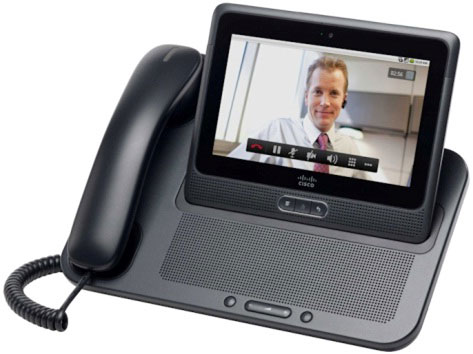
Cisco’s Cius tablet is all business

Source: http://www.techcentral.co.za

With all its rivals focusing their tablet computing offerings squarely at consumers, networking giant Cisco is taking a bet that its tablet offering, the Cius, will appeal to the corporate set. The product, which is now on sale in SA, is only available to business customers.

The seven-inch Android-based tablet has a 1,6GHz Intel Atom processor, a back-lit, multi-touch LCD screen with a resolution of 1024×600 pixels, 32GB of storage, front and rear cameras both capable of 720p video (and offering support for all Cisco TelePresence videoconferencing) and weighs just 535g.

At launch, there is only a Wi-Fi model available, but mobile broadband models will follow soon. The Cius includes a microSD slot for expanding the on-board memory. This can also be secured so the card can’t be read when used in a device other than the Cius.

Despite its capable hardware, the Cius runs the somewhat outdated Android 2.2. The company says this is because of the need for high security specifications and that there will be support for Android 3.1 in future.

Regarding the decision to go for a 7-inch screen, Cisco engineer Leon Wright says the company decided seven inches was the ideal combination of functionality and portability.

Click image to enlarge

Considering its target market, it’s not surprising the Cius offers virtual desktop integration, a unified communications porfolio, cloud centralisation of device management, and high-definition videoconferencing support, all of which is complemented by its “contacts-driven” user interface. The Cius also ships with QuickOffice preinstalled for viewing and editing all major document formats.

It offers operating system and file system-level encryption, password management, the ability to push and enforce policies remotely, the large-scale provision of services across multiple devices and the ability to remote lock or wipe the device – or a batch of them – on demand.

The Cius connects to a company’s existing telecommunications network via an optional docking station, which supports fixed-line telephony, includes a full duplex speaker for hands-free use, two USB ports for a keyboard and mouse, an HDMI-out port for extending video capabilities to an external display, and a power-over-Ethernet port for networking and charging.

Another feature of the Cius that has yet to make its way to consumer tablets is the detachable battery that offers an anticipated eight-hour battery life and can be swapped out with a spare if necessary.

Cisco has also created an application store that it calls App HQ, which is complementary to the Android Market. Apps HQ hosts applications specifically designed for the Cius and tested by Cisco.

It is also possible for system administrators to limit which apps users can install, and can do this per user or per group of users – for example, the sales team can all be granted access to the same apps.

System administrators can even create a custom marketplace with handpicked apps for their particular business.

The Cius costs US$750, but Cisco says this price can be driven down to around $650 in the case of bulk orders (rand pricing is not available). That’s a hefty price tag, particularly considering the dock and any additional equipment, like the carrycase, send the price even higher.

Despite the high price, Cisco should enjoy some demand for the Cius from those who do a great deal of teleconferencing. — Craig Wilson, TechCentral

Monday, July 4, 2011

The high cost of Cell Phone usage

ARE YOU PAYING TOO MUCH FOR YOUR CELL PHONE?

Today many businesses are looking for cost-saving measures especially when it comes to their cell phone usage. Paying too much for Cell Phones is a common problem we hear.

There are a multitude of solutions being offered out there today. With the advent of Wi-Fi calling customers can now deploy software on their smart phones which allows them to jump off the cellular network and use their cell phone data package to make and receive calls.

By integrating their cell phones to the customers office IP PBX Telephone System, customers can now utilize their office phone system as a tool to provide cost savings as well as improved functionality and enhanced productivity.

To learn more contact TRC Networks at 416.398.4448 or 1.800.398.4044

Tuesday, May 31, 2011

Avaya hits it out of the ball park with this one!

Last week at the Avaya User Group in Las Vegas, Avaya previewed their new branding. It certainly was a defining moment for Avaya.

As we begin to aggressively position Avaya as the leader in business collaboration and focus our innovation on transforming customers’ infrastructures to improve their collaborative capabilities.

Our new corporate branding: Avaya, "The Power of We"

Avaya, The Power of We is a tremendous description of how Avaya provides the right technology and services to help customers access information faster, pull people easily, make decisions more quickly and communicate across different devices.

Avaya’s marketing team has a full-scale rollout plan underway for The Power of We, which will culminate in the external launch of the new branding and products in September.

Stay tuned for more from Avaya. The executive team and marketing people definitely seem to be heading in the right direction. Sales and marketing awareness is growing in leaps and bounds

Looking to upgrade you existing Nortel Phone System? Check out TRC's Upgrade Program

With Avaya/Nortel, TRC has put together a upgrade program for your old Nortel Digital M obility Wireless Telephones. We will also buyback your current telephones.

Contact us for further details

Call Us: 416.398.4448 or 1.877.390.1166

Visit us online: http://www.trcnetworks.com/

offer valid until July 15th, 2011


Friday, April 29, 2011

Aastra Empowers Vertical Sectors through Advanced SIP-DECT Solution: Breaking News

New version of Aastra SIP-DECT excels in on-site mobility for small, medium and large enterprises

Dallas, TX, March 30, 2011 – Aastra, the market leader for enterprise DECT sales in EMEA[1] and number three worldwide[2], today announced the latest version of its highly scalable cordless SIP-DECT™ solution to increase productivity and accessibility while mobile. This solution is designed to meet the real-time communications demands of businesses with on-site mobile workforces and is highly suitable for numerous market sectors and industries including: manufacturing; hospitality; security and health care facilities; retail and industrial complexes.

This mobility offering can be fully integrated into an IP environment and combines the versatility of SIP with all of the benefits offered by DECT: high voice quality, confidentiality and competitive Total Cost of Ownership (TCO). Aastra’s SIP-DECT solution offers more than just voice communications – it provides employees access to important messages and emails on the move, making it a powerful Unified Communications tool that improves responsiveness.

Enhancements include increased scalability for very large deployments of up to 4,500 DECT handsets. Other key improvements include:

Informing and communicating more effectively

Integrated Messaging and Alerting addresses the needs of businesses that wish to communicate with an individual or groups of employees when a voice conversation is not possible or optimal. Messages and alerts may be sent to pre-defined DECT handsets; this is appealing to sectors such as retail, when staff in large stores can be contacted and located without the need for intrusive loudspeaker announcements. Alerts can be generated from a wide range of input sources including handset terminals, handset users, RSS feeds and email.

Instant emergency responsiveness

Location-based service is ideal for the health care industry or high security environments. This service enhances responsiveness for employees requiring emergency assistance by helping to locate them, for example in a ‘man down’ incident triggered by the handset. It can also help to identify the closest member of staff able to address an urgent situation. Using a locating server and web browser, the DECT handsets appear on a map.

Cost effective flexibility

Aastra offers further gains in the competitive TCO of its SIP-DECT solution with handset sharing. This user-friendly feature is appropriate for businesses with shift workers. Employees can retrieve their individual settings by activating their user profile when taking any handset in a charger rack. The efficiency of sharing handsets lowers costs while delivering flexibility.

Eliminating interference caused by the structure of a building

Poor voice quality, problematic reception and broken communication between employees are commonly experienced in industrial and large scale environments such as metal warehousing or concrete structures. The DECT XQ technology developed by Aastra provides improved voice quality regardless of the physical environment.

“SIP-DECT devices deliver many of the most sought-after qualities of an enterprise IP telephony endpoint, including security, mobility, cost effectiveness, simplicity, voice reliability, manageability and rich functionality. Aastra is uniquely positioned to bring the best of two worlds together: the advanced capabilities of mobile IP telephony and the robustness of DECT technology. With its latest SIP-DECT solution, Aastra is adding a third element to the equation: the potential to integrate additional unified communications elements. The company’s strong SIP philosophy, extensive endpoint expertise, and synergies across platforms, enable Aastra to deliver superior value to its customers,” declared Alaa Saayed, industry analyst at Frost & Sullivan.

The andel’s Hotel Berlin is a modern business hotel and conference facility. Accommodating up to 1,000 guests, its 200-strong workforce is constantly on the move across 14 floors. The andel’s Hotel required a state-of-the-art communications system that would benefit customers and staff, ensuring that every team member — from housekeeping to management — could be reached without difficulty. The solution also needed to overcome interference to mobile communications from the reinforced concrete structure of the building. “Aastra’s SIP-DECT solution ensures that any employee can be contacted quickly wherever they are in the building. This means we can respond more effectively to any incident and meet the needs of our guests,” said General Manager Ralph Alsdorf. “There is no doubt that we benefit from highly efficient processes and as a result we are able to position ourselves as one of the city’s top business hotels.”

“Aastra’s SIP-DECT offering is a best-in-class enterprise mobility solution. It delivers optimal levels of performance and scalability enriched with superior functionality to meet the specific needs of vertical markets. Combined with our market-leading range of DECT handsets, we are clearly demonstrating how we are shaping the future of enterprise DECT solutions, commented Thomas Stephan, Head of Product Line Management for SIP-DECT, at Aastra. He continued, “Through this solution we remain committed to leveraging open standards, essential for businesses as they seek investment protection and interoperability with existing systems.”

This SIP-DECT solution has been developed entirely by Aastra and includes:

  • The OpenMobility® Manager (OMM), a software product that administers all DECT handsets and mobility activities (roaming, seamless handover between base stations – including across multiple locations – and media stream). Dedicated applications for alarm, messaging and locating services as well as third party applications can leverage the functionality provided by OMM.
  • Aastra DECT handsets dedicated for business use.
  • Aastra base stations known as Radio Fixed Parts (RFPs) which can be connected to IP networks. The base stations are available for indoor use, outdoor environments as well as a dual mode WLAN/DECT model which offers the best of wireless in a single unit: DECT for mobile voice and WLAN data for mobile computing.

The solution can be deployed in most open-standard IP environments including Aastra call control managers, as well as deployed by other third party SIP compliant call managers including Centrex solutions.

For further information, please visit http://www.youtube.com/user/AastraUSA#p/u/3/JMQJ-iTG18Y

Wednesday, April 20, 2011

VoIP Migration Leads to Savings, Worker Mobility

HeadphonesThe telephone switchboard and landline desk phone may not be dead, but they are becoming relics of the past along with office ashtrays and typewriters.


Businesses are increasingly turning away from PBX (private branch exchange) phone systems and toward VoIP (Voice over Internet Protocol) telephony, which enables conversations to travel as data across the Internet. By 2013 more than 80 percent of businesses will use VoIP, according to research by In-Stat.

Is VoIP Right for You?

VoIP can be ideal if your company handles many calls among multiple people, has mobile employees, or juggles satellite offices. Implementing the technology can help to shrink or eliminate the cost of long-distance and conference calls.

In addition, VoIP provides the flexibility to manage calls as you would other data. For example, a caller's contact information may pop up on a Web-based dashboard or on a smartphone with a VoIP app when they ring your number. Depending on the service, voice calls can be translated to text that you read via e-mail or on a smartphone. Many VoIP services extend beyond voice to encompass instant messaging, virtual meetings, and videoconferencing. VoIP is key to unified communications efforts to integrate all of your correspondence into a single, digital hub.

If you already have a local or wide-area network, then you've already laid much of the groundwork. Make sure that your organization has enough bandwidth--a T1 line or better--before trying to cram your calls through a sluggish data pipeline.


VoIP Options

What kind of VoIP system you need depends on the size of your business and the number of locations. One person working at home probably doesn't need much more than a consumer service such as Skype, ViaTalk, or Vonage. Just sign up, download the app, don a headset, and you're good to go. Skype even offers encryption to keep calls private. Mobile VoIP apps can help you rein in cell phone bills.

But that's not enough if you need individual phone lines for your employees. In this case, the many VoIP options essentially break down to either a hosted or on-site VoIP service. Hybrid services can blend the two, letting you combine old and new equipment.

Research firm Frost & Sullivan projects that hosted VoIP will grow by 30 percent and on-premise by 12 percent over the next five years.

This Yealink SIP phone may look old-school, but it uses VoIP  services.This Yealink SIP phone may look old-school, but it uses VoIP services.Hosted VoIP leaves the heavy technology lifting to another company. It can help a small business appear bigger by offering PBX-style features, such as individual phone numbers for employees and call transfers, even to workers away from their desks. It can include toll-free numbers and integration with e-mail and faxing software. You basically download software and buy or lease IP phones for each user. There's little need to invest in expensive equipment or to pay an IT pro for ongoing support. 8x8 and Speakeasy are among the many companies offering hosted VoIP. Your Internet service provider may offer options for VoIP service, as well.

By contrast, on-premise VoIP will offer all the features of a hosted service, with the option for fine-tuning. Avaya and Cisco are among the vendors to consider. For this VoIP PBX option, however, you'll have to handle all the hardware and the calls, so it's time to call an IT pro. If you're upgrading from a pure PBX system, a VoIP gateway device on your network can make the transition. Once you have VoIP going on your network, you should optimize your router and your network to prioritize traffic to ensure high call quality.

Before You Leap

As for the drawbacks, a hosted service may lack the customization you crave, or charge you extra fees for adding features or new users; it could leave you high and dry if the company goes belly-up, too. With on-premise VoIP, you may suffer the obvious headaches and costs of managing any tech equipment in-house, including a large up-front investment.

Before you make the big VoIP switch-over, look closely at the numbers. Compare what you currently spend per user on phone service with what you project to pay a VoIP provider. Read the fine print of any service to determine any hidden fees. Figure in hardware and ongoing maintenance, and don't forget to add the cost of a faster Internet connection, if you need one.

Case Study: Green Heating-Products Seller Saves Greenbacks With VoIP

The problem:

JTG/Muir struggled with an aging PBX phone system. The lack of features and growing maintenance costs turned off the small business, which sells energy-efficient heating equipment directly from manufacturers. The Oakland, California, company turned to BoxIT to upgrade its phone system, hoping to lower costs and provide greater flexibility to its 30 users, including many who work remotely.

The solution:

BoxIT chose VoIP to replace the tired PBX technology, which had its heyday in the era of switchboard operators. JTG/Muir threw away boxes of NEC telephones from its staffers' desks to make way for Yealink SIP (Session Internet Protocol) phones.

Staff can access this Flash-based view of calls to transfer calls  and make recordings.Staff can access this Flash-based view of calls to transfer calls and make recordings. For the pipeline through which voice and data traffic flows, BoxIT went with a SIP Trunk from Cbeyond Cloud Services. Rather than connecting to phones via old-school physical wires as in a PBX system, the SIP Trunk controls communication over the Internet. BoxIT prioritized voice over regular Internet traffic on the company network to ensure high call quality.

It also opted for a customizable, free, Linux-based phone system with a Trixbox CE server, based on Asterisk software. This enables users to make and receive calls through either the Yealink SIP phones at their desks or via soft phone from a laptop, an iPad, an iPhone, or an Android smartphone. Making the latter option possible is the Counterpath Bria soft-phone app, which offers editions for PCs as well as for Android and iOS devices.

BoxIT also added to the package a Web-based Fop2 Flash operator panel. This allows office staff to view instantly who is on which call, as well as to transfer and record calls. There are plans to integrate JTG/Muir's CRM (customer relationship managment) tool with Trixbox CE.

No downtime was necessary during the migration, as BoxIT had prepared the new system to take over immediately once the switch was made.

The outcome:

The BoxIT team: Eric Hasler, Thor Myhrstad, Chhay Chea and Matt  MeierThe BoxIT team: Eric Hasler, Thor Myhrstad, Chhay Chea and Matt MeierWith the old PBX phone system, users working remotely had to dial in periodically to check voicemail messages. Now, after the VoIP overhaul, they can turn on features such as Follow Me, which allows an office extension to ring offsite wherever they might be. Voicemail messages sent out as a .wav file can be played back on a smartphone, laptop, or other device.

If the Internet connection goes down at the office, the SIP Trunk can be set up to call an alternate traditional landline or cell phone, or it can send a call directly to voicemail and then deliver it in an e-mail message.

In addition to enjoying a new system that provides flexibility for often mobile employees, JTG/Muir is saving $1200 each month with three times the bandwidth as the old PBX system.

With the overhaul, JTG/Muir not only reduced costs but also freed its staffers to focus on selling solar hot-water heaters, radiant systems, and other heating products, both on the road and from the office.

--Case study submitted by BoxIT.

Monday, January 31, 2011

Talk Is Cheap, VoIP Talk Cheaper

By Carolyn J Dawson

The Bria iPhone (News - Alert) edition gives iPhone, iPod Touch and iPad users the option to utilize VoIP calling in tandem with MSI's calling network to make pure VoIP calls from these devices at next-to-nothing prices, without having them to sacrifice on mobile plan minutes. By making use of the iPhone or iPod's existing contact list, Bria iPhone Edition facilitates easy and effective communication management with an intuitive interface that accommodates multiple calls.

In a press release, MSI CEO, John A. Roberts, said, "We are continually testing available products to maximize the MSI user experience, and highly recommend this solution to our clients as what we feel to be the very best SIP application for Apple (News - Alert) i-products. Combining the Bria App (available through the Apple App Store, for $7.99 USD) with MSI's global network provides what we feel to be the best combinations of calling technologies today."

The Bria app allows the user to have up to 8 SIP accounts on their phone and call functionality includes gives them the ability to swap between two calls, merge and split calls and perform attended and unattended transfers. The Bria iPhone Edition is a superior iPhone VoIP application for enterprises since it can also be used as an extension to enterprise client's PBX (News -Alert), thus allowing business users free mobile calls to and from their company's PBX, and instant access to everyone in their offices.

Roberts went on to say, "iPhone is of course, a phone, and therefore you would expect to be able to make calls from it. What is different in using the Bria iPhone Edition is that it is a SIP-based phone that uses a WiFi (News - Alert) or 3G connection to make and receive calls. Therefore customers can make and receive calls without using their cellular airtime. iPod Touch and iPad users can make and receive calls from their devices by using the Bria iPhone Edition, and either a wired earpiece headset, or a Bluetooth wireless headset."

The Ten Challenges of Mobile Video

By Jonathan Rosenberg, Chief Technology Strategist at Skype

On June 7, 2010, Steve Jobs unveiled the iPhone (News - Alert) 4 to the world. High-definition video recording, a new high-resolution display, a new form factor, and a front-facing camera were some of the new features. However, the feature that gained the most attention was the announcement of Facetime, a video calling feature integrated into iPhone 4. Facetime enables one-to-one video calling between iPhone users with just the single touch of a button. It renders in full screen, and enables the user to send video using either the front or rear-facing cameras (for a see-what-I-see experience).

Reactions to Facetime were mixed. Some heralded it as the arrival of video telephony to mobile. Others saw it as a gimmick. One thing is certain however – Facetime is not the first time a company has attempted to market mobile video telephony. The feature has been around for a while, in fact. European mobile phones with video calling have been available for years. Mobile video telephony was one of the original motivations for 3G investments among mobile operators. However, the feature never took off.

Building a successful mobile video solution requires tackling ten technology challenges:

Limited Front-Facing Cameras

Mobile video requires a front-facing camera to accomplish two-way video chat. This feature is more common outside of the U.S., and is only recently arriving on mobile phones in the U.S. It is possible to provide a “see what I see” feature using the rear-facing camera; this represents a substantially different use case.

Low-Quality Screens

To see the other participant, a large, high-resolution screen is required. Up until the arrival of iPhone and phones with similar form factors, screens have been too small to have a quality video experience.

Limited Networks

Video consumes much more bandwidth than audio. Depending on the size of the screen, continuous bandwidth of between 100knps and 250kbps are typically needed, and even more than that is better. This kind of bandwidth is hard to sustain on wireless networks, and not always available.

Compatibility Challenges

For a video call to work, the other participant needs compatible equipment and software. It can be very difficult for an average user to figure out whether a video call will work, or what to do to make it work. Typically only a small subset of a user’s contacts are reachable on video. This has been especially problematic in solutions that are carrier specific, since users often do not know the mobile operators of their contacts.

Poor Lighting

Good video requires good lighting. This is already problematic in desktop video. In mobile video, where users are under a highly variable set of conditions, and with conditions that change even during the call, the challenges of good lighting are even larger.

Uncentered Video

Users must hold their phones in such a way that the cameras are centered on their faces, and remain centered throughout the calls. This is difficult to do. Since users cannot hold their hands perfectly still there will always be shaking. This reduces the overall quality of the experience.

Discomfort

For calls of any duration, users must hold the cameras at a set distance from their faces, and not change it. This can become uncomfortable after a while. Many users are often uncomfortable with video in general, and don’t want to be seen all of the time.

Limited Use Cases

Mobile phones are often used in cases in which users are wearing Bluetooth headsets and doing something else with their hands. Driving and eating are two examples. Since mobile video requires users to hold the phone, video calls are not possible in these cases.

Insufficient CPU

Decoding and encoding of video are CPU-intensive operations. Many phones do not have sufficient horsepower to run two-way video, especially with the level of quality required. This problem is getting addressed through the natural evolution of mobile CPUs, and is also getting addressed by the presence of dedicated DSPs, which can do the encoding and decoding in hardware.

Poor UI

Video must be easy to use. Many video solutions in the past have had complex UIs that were difficult for the average user to navigate.

These challenges fit into several categories. Some of them are hardware-oriented (limited front-facing cameras, insufficient CPU, low-quality screens), and can be addressed by changes in hardware. Some of them are software-related (compatibility challenges, poor UI), and can be addressed by improvements in software. Others are more fundamental (poor lighting, discomfort), and solutions may be possible through innovation.

Unfortunately, there is no public data available on the usage of Facetime. Whether it has adequately addressed all of these technical challenges to gain market traction, only the future will tell.


Monday, November 8, 2010

Available on the iPad/iPhone Full-featured mobile business phones with 2 phone numbers

Toktumi's Line2 app takes mobile devices such as the iPad and iPod Touch and turns them into full-featured business phones.